

Victoria Beckham to EastEnders: Ronni Ancona on Her Iconic Comedy Career
The fragile, deceptive tranquility of British entertainment has officially collapsed into an absolute nuclear winter of structural artistic reinvention, as the extraordinary narrative arc of Ronni Ancona permanently fractures the industry’s established hierarchy by linking the elite upper echelons of pop-culture parody directly to the gritty cobblestones of Walford. For decades, the multi-award-winning impressionist and actress has walked a razor-thin tightrope over a burning abyss of creative complacency, methodically constructing an ironclad reputation as the ultimate shape-shifter of British comedy alongside her iconic partner-in-crime, Alistair McGowan. The grand illusion that Ancona would permanently confine her unchained, chameleonic talents to the safe perimeters of late-night sketch shows completely exploded during this high-stakes broadcasting era, converting her career trajectory into an immediate, high-voltage arena of total dramatic exposure. The atmospheric pressure inside the television industry plummeted to absolute zero the exact microsecond she transitioned from her legendary, razor-sharp skewering of Victoria Beckham to breach the dramatic perimeter of EastEnders, dropping a definitive narrative bomb that thoroughly deconstructs the fragile architecture of performance art and draws a deep, blood-red line of engagement that changes everything across the regional geography of contemporary show business.
The suffocating tension surrounding this artistic evolution rapidly morphed into a profound masterclass of psychological and performative warfare as Ancona completely unleashed the raw velocity of her seasoned dramatic training, aggressively throwing her intense manifestations of human character directly into the viewers’ faces like a sequence of physical blows. Refusing to tolerate a single shred of transparent typecasting or afford casual fans an easy emotional exit from her artistic perimeter, her career trajectory went absolutely ballistic under the raw weight of her escalating creative ambition, her voice dropping from high-society satire to a low, guttural theatrical rumble that frozen the critics dead in their tracks. Ancona relentlessly deconstructed the fraudulent architecture of the boundary lines the media had naively manufactured to keep comedy and serious soap opera acting completely isolated, fiercely proving through her historic, BAFTA-winning timeline that weaponizing her supreme observational intellect was a magnificent tactical maneuver that could seamlessly infiltrate any dramatic network. With her creative veins visibly pulsing beneath the skin under the raw velocity of this unhinged versatility, her relentless focus past the absolute breaking point explicitly proved that the hyper-stylized world of Posh Spice and the raw, bleak domestic battles of the East End are merely two sides of the exact same narrative coin—a radioactive time bomb that has successfully incinerated traditional broadcasting filters.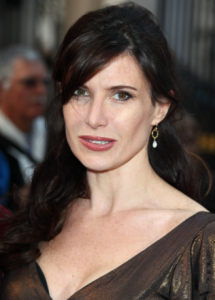
The sheer, spine-chilling velocity of this professional unmasking beautifully deconstructs the multi-layered double standards that have come to colonize the relationships between performative genres, plunging a hyper-ventilating audience into a state of absolute, breathless gridlock as the genuine, stomach-dropping mechanics of her comedy career are unshadowed. For generations, the industry had plundered the internal reserves of sketch comedians, foolishly calculating that keeping their talents hidden behind a wall of superficial caricature and short-form mimicry would act as an unbreakable shield against serious critical acclaim. Instead, this high-stakes isolation had inadvertently functioned as a dangerous tactical minefield, leaving traditional dramatic actors entirely legally and emotionally toothless when confronted by Ancona’s independent, ground-up theatrical fortitude, which was meticulously forged at the Edinburgh Fringe and polished through complex, multi-layered satirical manifests. By explicitly proving that the true currency of survival inside a modern television landscape is no longer a pristine, single-genre reputation or an unearned immunity from parody, but the cold capacity to withstand absolute artistic exposure, her career paradigm shift transforms the traditional casting sanctuary into a competitive arena where her technical precision is entirely supreme.
This catastrophic fallout inside the cultural mainstream has instantly propelled the surrounding television networks, theater institutions, and independent production companies onto a dangerous tactical minefield of their own, transforming the routine celebration of an iconic performer into a pulse-pounding gauntlet of permanent industry consequences where every casting director is forced to choose an immediate side in an impending war of attrition. While a completely spellbound core fandom continues to binge her classic, high-octane comedy routines across digital streaming perimeters—where her unmatched deconstctions of global celebrities paint a magnificent picture of modern cultural satire—the traditional television ecosystem remains entirely defenseless against her rising tide of dramatic authority. This administrative nightmare leaves traditional daytime writers and big-budget cinematic producers walking straight into a high-stakes tactical minefield, as the acoustic vibrations of Ancona’s dramatic shifts successfully liquidate the unearned immunity and social titles that mainstream actors manufactured to exploit the situation from the dark. The entertainment elite blindly calculate that they can coordinate a defensive barrier to keep performers neatly categorized within separate, isolated boxes, completely blind to the reality that Ancona’s out-of-pocket brilliance has permanently turned the outer boundary lines of British media into a claustrophobic viper’s nest where versatility rules supreme.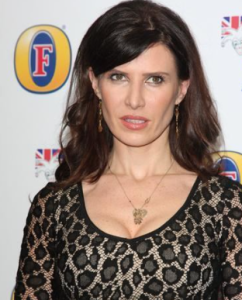
As the heavy, dramatic credits prepare to roll on a 2026 entertainment era defined by lines being drawn in forensic stone, blood, and theatrical tears, the entire legacy of Ronni Ancona stands completely paralyzed on the absolute precipice of a definitive, paradigm-shifting transformation that will leave pop-culture enthusiasts completely spellbound in the dark. The coming months promise an unyielding, pulse-pounding gauntlet of personal and professional consequences as this chameleonic powerhouse coordinates a brand-new campaign to reclaim the spotlight, frantically defending her compromised artistic boundaries against an incoming assault of critical scrutiny while a hyper-vigilant audience rushes to social media platforms to drop their wildest theories and smash that like button. In a television universe where old relationships and established formats are routinely weaponized as instruments of absolute structural destruction and the choices you manufacture to insulate your career from reality will inevitably return to hunt you in the shadows with a devastating vengeance, the final, fragile threads of industry consensus are violently snapping in real time. Viewers remain securely buckled into an unforgettable emotional rollercoaster across terrestrial channels and BBC iPlayer, hyperventilating into the dark as they anxiously watch the chess pieces fall into place for a blockbuster institutional war, counting down the hours until the trap finally snaps shut and reveals the true magnitude of a legacy that has forever altered the broken souls of British broadcasting.