
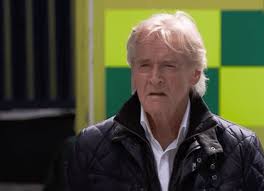
At 81, Norris Cole Finally Revealed The Truth About Leaving Coronation Street
At 81, Norris Cole Finally Revealed The Truth About Leaving Coronation Street
The rain-slicked, shadow-drenched cobblestones of Weatherfield have officially transformed into a high-octane theater of absolute psychological devastation and community volatility this Tuesday, June 2nd, 2026, as the explosive history of ITV1’s Coronation Street unseals a spectacular real-life and narrative breakdown that leaves a legacy broadcasting empire standing on the absolute precipice of an irreversible, multi-front historical and biological reckoning. Sending an intense, screaming shockwave through millions of dedicated, hyperventilating households across the United Kingdom tuning into this landmark primetime milestone retrospective update from the unhinged fan networks, the pristine veneer of traditional working-class sanctuary, neighborhood comedy, and domestic finality has been cleanly liquidated by an onslaught of weaponized cardiac emergencies, off-screen stroke tragedies, and shifting creative blockades over long-term character survival. Wielding an unmistakable weight of prime-time pressure as old traditional formatting boundaries are entirely melted away under the intense, blistering glare of the network lens, production bosses have officially unsealed a groundbreaking matrix of interconnected real-world trauma, blueprinted to track the horrifying aftermath of a beloved icon’s physical decline. At the absolute center of this unfolding television apocalypse is a dark, reality-altering transformation of an elder statesman’s fading biological resilience and a cornered character’s permanent exit velocity, forcing a frustrated and desperate audience to look a cornered Malcolm Hebden, the sharply watchable specter of Norris Cole, and the fractured landscape of The Cabin dead in the face as a sudden execution of human truth completely uncouples the territory’s most prominent legends from their remaining cognitive buffering.
This profound atmospheric decay moves in terrifying synchronization with a filtering campaign of raw anxiety operating deep within the historical and medical infrastructure of the series, where Malcolm Hebden’s grueling battle with profound physiological breakdown and severe contract finality hit a chaotic terminal tripwire away from the cameras. The baseline security of the show’s core comedic framework went completely thermonuclear inside the clearing of Weatherfield the exact fraction of a second a near-fatal cardiac arrest pulverized the 81-year-old actor’s physical capability, forcing the 27-year legacy icon—who gave the program more than 1,600 episodes of gold-standard character work—into an involuntary retirement from the geographic mainframe. Bypassing the traditional smoke and mirrors of routine backstage feuds, contract disputes, or sensationalized sackings to address his sudden disappearance, Hebden unmasked the terrifying reality of his 2017 medical crisis, revealing a grueling three-week induced coma and emergency life-saving surgery where his heart was physically repaired using cow tissue after his anatomy completely collapsed at the hospital. Stripping away the audience’s remaining cognitive buffering because the actor bluntly summarized his survival with the bone-chilling phrase “I was dying,” this visceral biological crisis effectively trapped his tattered recovery inside an absolute psychological prison of pure adrenaline, forcing him to realize that while his creative mind remained fiercely willing, his battered body could no longer endure the exhausting, high-intensity repetition of long studio production days in broad daylight.
The layout of this interstate industrial warfare takes an extraordinarily complex, visceral turn across the crowded parameters of the script, however, because the production team’s subsequent attempt to handle Norris Cole’s absence violently checkmated his survival directly into a terminal position of permanent narrative liquidation. The environmental temperature within the storyline redlines exponentially tonight because following a brief, hope-fueled 2019 comeback where a fragile Norris migrated to Edinburgh with Freda amidst Mary Taylor’s bittersweet singing of Cliff Richard’s Miss You Nights, showrunner Iain MacLeod desperately left the corporate door unsealed for an off-screen compromise at the Still Waters retirement complex. Refusing to wave the white flag of permanent compliance beneath the blistering glare of viewer expectation, the writers ultimately chose to detonate an absolute atomic bomb of finality onto the ledger in late 2021, unmasking the devastating news that the iconic busybody had suffered a fatal, irreversible stroke. This calculated narrative milestone triggered a high-velocity wave of domestic grief across the canvas, forcing surviving icons like Ken Barlow, Gail Platt, and Rita Sullivan to congregate beneath the suffocating shadow of a televised funeral, permanently closing the administrative borders on Norris’s future and stripping the landscape of his signature lemon-lipped barbs and sharp-tongued surveillance.
What a deeply affected national audience has masterfully decoded through this heartbreaking look at generational decay is the intense, low-frequency precision with which Hebden’s enduring bond with the program continues to bridge the dark chasm between real-world survival and fictional remembrance. The internal pressure cooker within the industry reached a suffocating maximum when an elderly Malcolm unexpectedly stepped back into the media clearing for Barbara Knox’s landmark 90th birthday celebration in 2023, followed by a deeply emotional 2025 appearance alongside Sam Aston on Dancing on Ice, where an uncoupled fanbase watched a tattered but smiling legend receive his public flowers from the very actors he had taken under his protective wing. These real-world milestones masterfully unmask the reality that while the physical character of Norris Cole has been permanently buried beneath the wet cobblestones, the theatrical lineage established through his flawless pairings with Rita’s friction, Emily Bishop’s warmth, and Mary’s eccentric delusions remains an untouchable fortress of cultural nostalgia that completely shields his legacy from the typical amnesia of modern media cycles.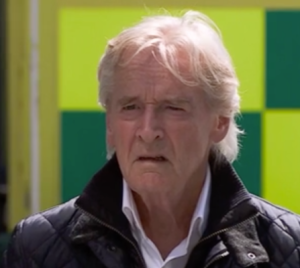
Ultimately, as the suffocating twilight of mid-2026 establishes its permanent, unyielding grip over the weekday evening network schedules, the global entertainment community remains entirely suspended over an absolute abyss of breathless suspense, watching the slow-motion deconstruction of a nation’s cultural trust. The breathtaking pacing of this slow-burn industry masterpiece excels by demonstrating with an unmatched authority that when the currency of pride, comedic timing, and deep-seated transactional memories completely bankrupts the community’s elite, the raw reality of mortality will dictate the territory’s power dynamics forever. Fandom networks are left to pace their living room floors until 3:00 a.m. on pure adrenaline and intense curiosity, frantically hitting the stream notification bell across all major digital platforms and dropping their wildest real-time theories in the comment sections below to debate whether modern soap operas can ever successfully find the strategic confidence to recreate 27 years of audience familiarity on demand, or if the impending chemical explosion of boardroom truth, the accelerating loss of the show’s original kitchen-sink spirit, and forensic retribution across the executive landscape will leave the genetic layout of Coronation Street permanently and irreversibly altered in its wake as the final credits prepare to roll on an absolute prime-time television masterpiece of modern media drama.